



Fundamentals of Casino Random Number Generation
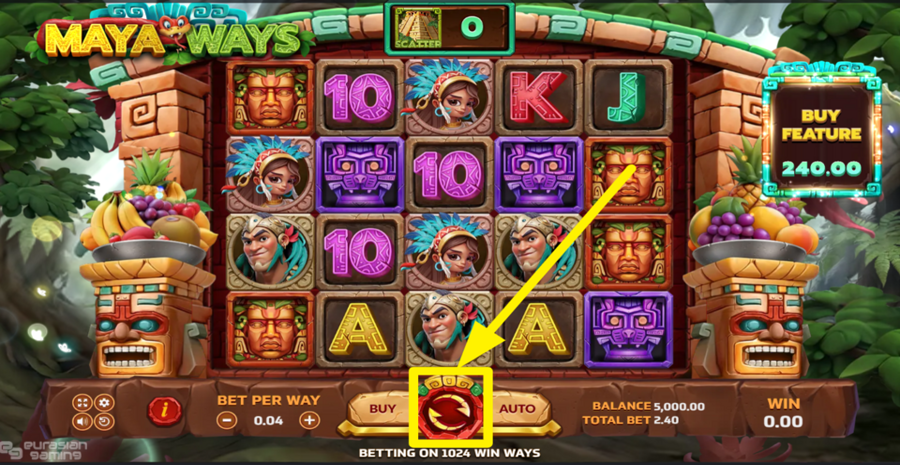
The instant you tap spin on a slot or wait for a card, software produces a number that locks in the result. Online casinos call this a Random Number Generator, or RNG. Polish players often ask if these systems can be trusted. In brief: regulated sites like SpinMaya Casino use RNG tech that’s been tested for both unforeseeability and fairness. A proper RNG has no memory. It ignores hunches or hot streaks. It just produces numbers at a frantic clip—thousands per second—even when nobody’s playing. Each number gets translated into a concrete result: a cherry on the payline, the ace of spades, a six on the dice, or a scatter symbol that triggers free spins. Once you comprehend how RNG works, a lot of the mystery around online games vanishes. You’ll identify bogus claims faster and treat the whole thing as entertainment, not superstition. This guide explains the core ideas in plain language: seeds, entropy, independent checks—no technical manual required.
What Makes Randomness Determines Fair Online Play
Fairness isn’t merely a buzzword in online gambling. It hinges on whether every outcome stands an equal chance, regardless of the player, what device they’re on, or when they play. If results weren’t unpredictable, games could lean in the house’s favor past the stated return-to-player percentage. That RTP figure—say 96%—only holds over millions of spins; short-term swings may be harsh. An RNG makes sure you won’t anticipate a slot spin from the one before it. It also ensures card shuffling and roulette spins on par with their land-based cousins. For Polish players, that implies a session at SpinMaya Casino should feel like playing at a real table, with no concealed pattern pulling strings. Regulators require that game software churns out outcomes devoid of detectable bias. When the RNG works right, a long losing streak is merely statistics doing its thing—not proof the game is fixed. Same goes for a big win. Randomness shields both the operator and the player by removing any deliberate control over individual results.
Genuine Randomness vs PRNG
Most casino games use pseudorandom number generators, or PRNGs. They are not random in the strict, philosophical sense—they follow a deterministic algorithm. But the sequence they produce can be computationally equivalent from true randomness for all real-world casino needs. True randomness demands a physical source: radioactive decay, atmospheric noise, those types of sources. Difficult to bolt onto quick online play. A PRNG starts with one initial seed and then churns out a stream of numbers that looks unpredictable. The math behind it could be a well-known function—like a Mersenne Twister or a cryptographically secure hash—but the seed remains secret, and the algorithm’s internal state is huge. The essential part: without knowing the seed and the algorithm’s exact state, nobody can guess the next number. For players at SpinMaya Casino, that distinction carries less weight than the testing and certification behind the generator. Regulated platforms have to prove the PRNG displays no practical bias over millions of rounds. In everyday play, that level of unpredictability is enough to keep games balanced and outcomes independent.
How a Random Number Generator Actually Works
- The algorithm takes a starting number, known as a seed. This seed might be anything from a timestamp to a hardware reading.
- It passes that seed through a complex set of mathematical operations—multiplications, modular arithmetic, bit shifts—to generate a new number that looks nothing like the seed.
- That number gets mapped to a game result: a reel symbol, a card from the deck, a dice roll, or a bonus trigger.
- The entire cycle repeats at breakneck speed—thousands of times a second—even when the game sits idle, so the next spin always gets a fresh, unpredictable number.
The Role of Seed Values and Entropy
- Seeds are the starting numbers you feed into the RNG algorithm to initiate a different sequence. They might come from a server clock, a hardware register, or a dedicated entropy source.
- Entropy is the random disturbance gathered from the environment—cursor motions, temperature variations, network timing, even microphone static.
- Without updated entropy, a PRNG could reproduce the exact sequence if the exact seed gets used again, which would let an attacker anticipate outcomes.
- Modern casino platforms combine entropy from various sources—physical randomness, user input, system jitter—making seed prediction practically impossible.
Third-party Testing and Certification
Independent test labs are the watchdogs that confirm an online casino’s RNG is working. Big names like eCOGRA, iTech Labs, and GLI run large-scale simulations and statistical checks—chi-squared tests, poker tests, runs tests—to uncover patterns or bias. They scrutinize the source code, review how seeds are generated and stored, and compare actual outputs against expected distributions. If a game claims a 96% RTP, they confirm that the RNG’s output, when mapped to game rules, actually delivers that over millions of rounds. A certificate from one of these organizations is a reliable signal that a platform takes fairness seriously. SpinMaya Casino, like other reputable operators, works with game providers whose RNG systems have passed strict assessments. That doesn’t mean every player wins; it means the odds align with what’s advertised and no hidden lever manipulates the results. Regular audits keep things in check after a game goes live. For a Polish player, those certificates provide more practical peace of mind than sifting through the math behind the RNG—they transform complex technical checks into a simple trust signal.
Widespread Myths About RNG at Online Casinos
- A machine is “due” to pay after a losing streak – the RNG lacks memory of previous spins; each spin is a fresh roll of the dice.
- Casinos can toggle a switch to make games run cold – licensed systems can’t be adjusted remotely without starting an audit; any software change would leave a trace.
- Betting more changes the RNG output – stake size impacts how much you win, not the random symbol that lands.
- Live dealer games don’t use an RNG – they do, for shuffling cards and managing bonus features such as prize wheels.
FAQ
What is an RNG for an online casino?
An RNG is a piece of software or hardware that spits out numbers with no clear pattern. In casino games, those numbers turn into card ranks, reel symbols, or whatever output the game needs. Most online platforms, SpinMaya Casino included, use a pseudorandom generator. It starts with a seed—a number taken from server time, player input, or a hardware entropy source—and runs a mathematical formula. Because the algorithm cycles at high speed and the seed stays hidden, nobody can predict the next result. Independent testing validates that the output is fair.
Can a player predict the next slot spin?

No, you are unable to predict the next spin on a certified slot. Every result stands alone—the RNG doesn’t remember what happened before. Recording thousands of spins won’t give you an edge. Even if you log every spin for a year, the sequence won’t repeat in a useful way. The next number comes from a hidden internal state. Certified platforms use algorithms that pass tough unpredictability checks. Short-term patterns might appear by chance, but you can’t use them to gain an advantage. That independence is exactly why online slots are games of luck, not skill.
Are pseudorandom generators safe for real-money games?
Certainly, pseudorandom generators are reliable for real-money play when they are designed and tested right. They use a math formula, not physical randomness, but the sequence remains unpredictable unless you know the seed and the algorithm’s state. The same type of PRNG is employed in secure communications and online banking, so it is a proven approach. Regulators insist on proof that outputs show no practical bias over millions of rounds. Independent labs examine the code and run statistical tests. For a player, a certified PRNG delivers enough randomness to keep slots, blackjack, roulette, and other games fair.
At what intervals is an RNG tested?
Testing occurs before a game launches and continues regularly once it is live. Independent labs run huge simulations—sometimes billions of rounds—looking for bias, repeated sequences, or hidden patterns. They also check how seeds are generated and stored. Platforms like SpinMaya Casino count on game providers that supply certification from recognized testing houses. Ongoing audits could be scheduled or triggered by system updates. This oversight identifies potential problems and keeps RNG performance within accepted limits.
Is the casino able to control RNG outcomes remotely?

In a regulated setup, the casino operator cannot flip a switch to make a game go cold or ensure a win. The RNG runs without pause and churns out numbers without anyone touching it. Modifying the outcome would mean accessing the game software and seed state, both of which are secured and monitored. Even if an operator desired to tweak a game, the audit trail would detect the change. przeczytaj tę recenzję Audited platforms keep game logic separate from promotional tools. The house edge is embedded in the rules, but individual results aren’t manipulated. Certification confirms there’s no remote control.
Why might players see long losing streaks if RNG is fair?
Long losing streaks are a typical part of random play https://spinmayas.pl/. A fair RNG doesn’t spread wins evenly across a short session. Each spin is separate, so you can quickly see dozens of losses in a row without anything being broken. If you flip a coin 100 times, you’ll see runs of heads or tails; the same principle holds true. The return-to-player percentage only emerges over millions of rounds. Our brains focus on losing streaks more than winning ones, which makes sessions feel unfair. Statistical variance explains the swings. A certified RNG just means the streak is randomness, not rigging.